
Garage Door Opener Not Working? Troubleshooting for NM Homeowners
When your garage door opener not working suddenly brings your day to a halt, it can leave your car stuck in the garage, your house exposed, or your routine completely thrown off.
A garage door that will not open or close completely is not just inconvenient, it is a safety and security concern.
The good news is that many garage door opener problems come down to easy fixes like dead batteries, a tripped circuit breaker, or an accidentally pressed lock button on the wall. Other issues involve internal components like the motor unit, logic board, or worn drive parts that need professional attention.
In New Mexico, heat, dust, and cold nights can affect how garage door openers operate, especially sensors and wiring. This guide walks through a safe first step checklist, simple tests, and clear signs that it is time to call the professionals for expert service.
Start Here: Safety Checks Before You Troubleshoot
Before you press a button or remove a cover, safety comes first. If the door looks crooked on the tracks, will not stay aligned, or makes loud noises when you try to operate it, stop immediately. A garage door opener is not designed to compensate for mechanical failures in the door system.
Never attempt to adjust springs, cables, or internal tension parts. These are high-risk components and can cause serious injury. Keep people, pets, and your car clear of the driveway and door opening. Never stand under a moving door.
If safety sensors or a photo eye prevent the door from closing, do not bypass them as a long-term solution. These systems are federally required for safe garage door operation and are designed to prevent injury and property damage.
The Consumer Product Safety Commission (CPSC) enforces the safety standard for automatic residential garage door operators, which explains why properly functioning safety sensors are critical. If a safety system is not working correctly, scheduling professional garage door repair service is the safest option.
Quick Troubleshooting Checklist (Do These in Order)
Start with the first step that is easiest to verify. Many cases of a garage door opener not working are caused by simple power, control, or sensor issues that can be identified quickly.
Step 1: Confirm the Opener Has Power
Make sure the opener is plugged in securely and connected to a working power source. Check the circuit breaker and reset it if it has tripped. If the unit is connected to a GFCI outlet, press reset and test the system again.
Step 2: Test the Controls in Order
Press the wall button first, then test the remote control, and finally the keypad. This helps determine whether the issue is with the wall switch, the remote, or the motor inside the opener.
Step 3: Check the Wall Control Settings
Inspect the wall control for a lock button or vacation mode setting. When this feature is enabled, remotes and keypads are disabled, which can make it seem like the garage door opener has stopped working.
Step 4: Replace the Remote Batteries
Install new batteries even if the remote still lights up. Weak or dead batteries often cause signal problems before the remote completely fails.
Step 5: Inspect the Safety Sensors
Check the sensors or photo eye near the bottom of the garage door tracks. Remove debris, wipe away dust, and confirm the sensors are aligned and facing each other properly.
Step 6: Watch and Listen for Diagnostic Clues
Press the control and observe what happens. If the motor hums, clicks, or the LED light flashes, these signals can help identify sensor issues, wiring problems, or internal faults within the opener.
Most Common Reasons a Garage Door Opener Stops Working
1. Remote Not Working, But Wall Button Works
This is a very common reason homeowners call for service. In most cases, the issue is dead batteries in the remote. Installing new batteries is a fast and inexpensive fix.
If that does not solve it, the remote may need to be reprogrammed using the learn button on the motor unit. Power surges, Rogers, or battery changes can disconnect the remote from the system. Also, check the lock button on the wall panel.
Signal problems can occur due to nearby devices, metal shelving, or signal interference from Wi-Fi routers and other radio frequency sources. If multiple remotes fail at once, the logic board or receiver inside the opener may need repairs or replacement.
2. Wall Button Not Working
When the wall button or wall switch does nothing, start by confirming the opener has power. If the outlet works but the opener shows no lights, internal wiring or the power source may be the issue.
Loose wires at the wall control or at the motor head are another possibility. Over time, vibration can loosen connections. Wall controls can also wear out and stop responding.
Stop troubleshooting and call for professional service if you smell burning, hear repeated clicking, or the unit appears completely dead. These signs often point to motor or board failure.
3. Opener Runs, But the Door Doesn’t Move
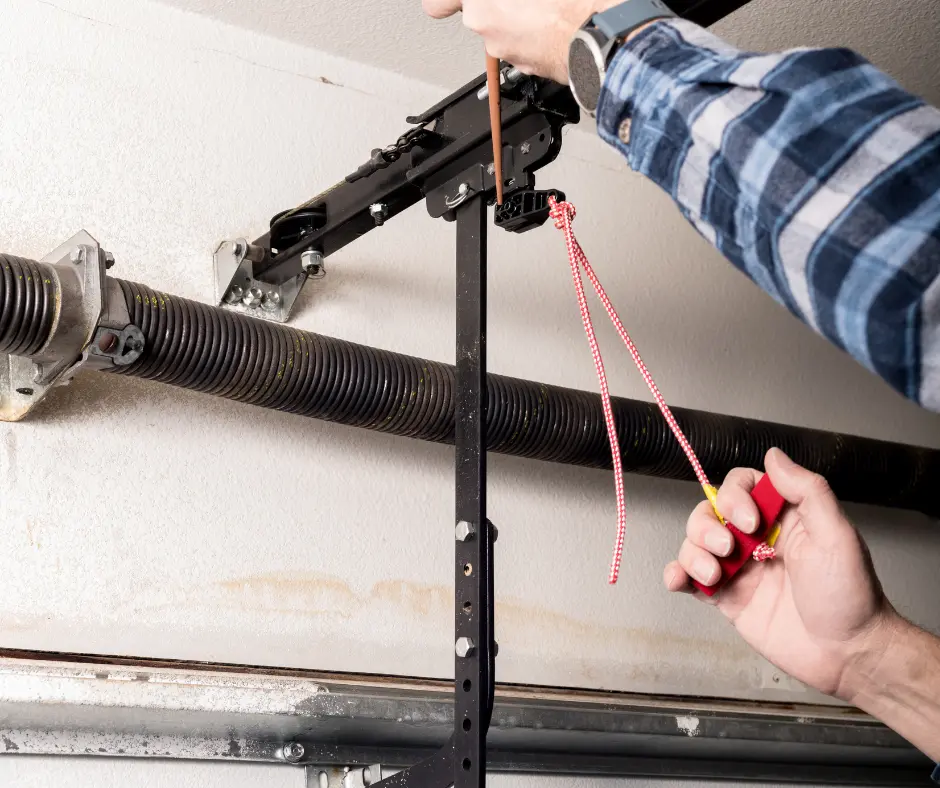
If the opener runs but the door works manually, check whether the emergency release was pulled. This disconnects the door opener from the door carriage.
In older systems, stripped gears or a worn drive assembly are common. Chains, belts, or trolleys can fail after years of use. Another cause is a door that is too heavy due to spring issues. If the opener strains or stalls, unplug it and avoid forcing it. Continued use can damage the motor and other internal parts.
4. Door Starts Down Then Reverses, or Won’t Close (Photo-Eye Sensor Issues)
Sensor issues are especially common in NM homes due to dust and sun exposure. Dirty lenses, blocked beams, or misalignment can prevent the door from closing fully.
Sun glare at certain times of day can interfere with sensor communication. Damaged wiring at the sensor leads can also cause intermittent failures.
Gently clean the photo eye lenses and realign them until the indicator lights stay solid. If the door still will not close completely, further inspection or replacement may be needed.
5. Opener Light Blinks or Flashes (Diagnostic Code Problems)
Many garage door openers use blinking lights to communicate problems. A flashing LED light near the learn button often indicates specific faults related to sensors, travel limits, or the logic board.
Your manual may explain these codes. If basic cleaning, reset, or alignment does not clear the error, the opener likely needs expert service. Repeated codes usually signal deeper electrical or system issues.
6. Intermittent Problems (Works Sometimes, Fails Sometimes)
Intermittent failures are frustrating and often get worse. Heat buildup in summer garages can stress older motors. Loose wiring or borderline sensor alignment can cause the system to fail randomly.
Weak batteries often show up first as reduced remote range. If the opener has recently stopped working more often, early fix and service are usually more affordable than waiting for a full breakdown.
Repair vs Replace: When an Upgrade Makes More Sense
Sometimes it is better to replace rather than repair. Repeated failures, loud grinding noises, outdated security systems, or frequent logic board problems are signs that the opener is nearing the end of its life.
Modern openers offer quieter operation, better safety features, smart controls, and Wi-Fi connection options that let you monitor access to your garage from your phone. Older non-reversing units are a known hazard and should be upgraded.
The CPSC warning on non-reversing garage door openers explains why replacement improves safety.
Get Your Garage Door Opener Working Safely Again
When a garage door opener not working disrupts your day, start simple. Check power, test controls, replace batteries, inspect sensors, and watch for diagnostic lights. In New Mexico, dust, heat, and cold swings can all affect opener operation.
If the problem keeps returning or safety is a concern, it is time to call a professional. Call (505) 447-9441 to schedule service, or reach out through our contact page.
Unlimited Garage Door Services delivers clear communication, safety-first solutions, and reliable repairs you can trust.